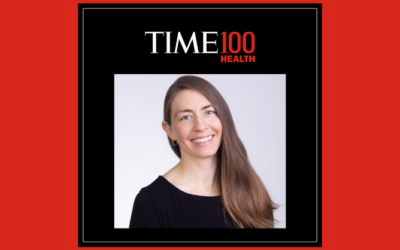
Communicating about public and global health has never been more challenging — or more important. Stanford Center for Innovation in Global Health is hosting a panel of global health communications experts that will discuss the current challenges, including disinformation, the rise of AI, and declining public trust, and highlight solutions and best practices, based on a new commentary in Nature Health and insights from the Stanford Global Health Media Fellowship.
Search
From Hantavirus to Ebola: How Changing Environments Are Driving Disease
What can recent hantavirus and Ebola outbreaks tell us about the growing connections between climate change, biodiversity disruption, and infectious disease risk? Stanford Center for Innovation in Global Health and Stanford Center for Human and Planetary Health invites you to join them for a virtual panel discussion on Friday June 5, 11am-12pm PT featuring experts exploring these recent disease surges as case studies in the growing complexity of managing pathogens in a changing world.
2026 Alliance Annual Meeting | What Global Health Must Build Next
At a time when global health is rethinking old models, the Bay Area Global Health Alliance community asked a sharper question: what must we build next? On May 28, the Alliance convened its multisector community in San Francisco and online for a members-only gathering that created space for candid, provocative conversation about the future of global health — from the role of technology and power, to the shift from market shaping to market building, to the trusted partnerships needed to navigate change.
AI’s Biggest Risk Isn’t the Technology — It’s Who Controls It, Raffi Krikorian Tells Alliance Annual Meeting
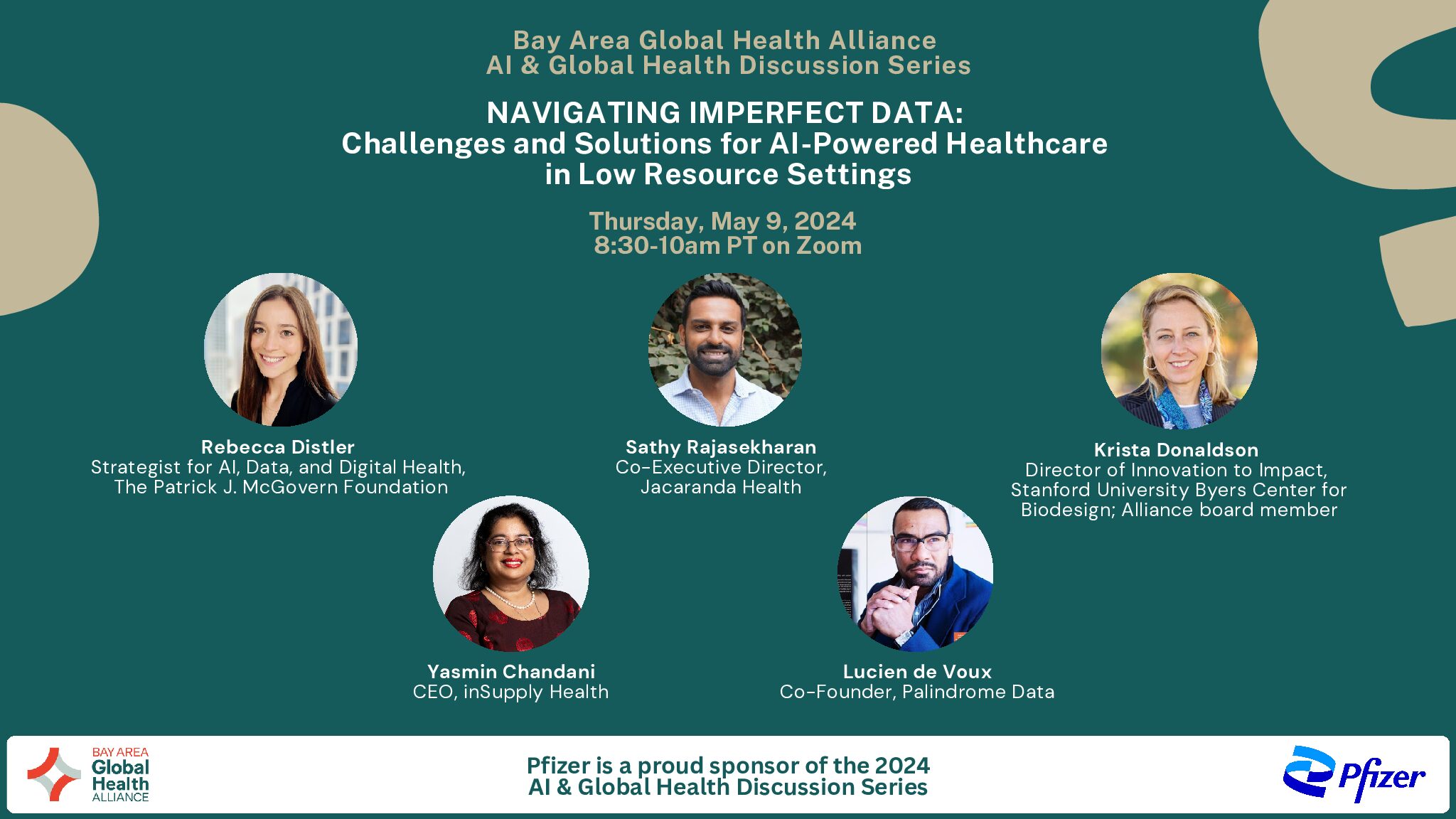
At the Alliance’s 2026 Annual Meeting, Krista Donaldson, Alliance board member and director of innovation to impact at Stanford Biodesign, moderated a fireside conversation with Raffi Krikorian, chief technology officer at Mozilla and board chair at Mozilla.ai and Medic, exploring how global health leaders should think about technology, power, and responsibility in the age of artificial intelligence (AI).
AI as a Catalyst: Reimagining Innovation to San Francisco
Join MIT, Stanford, and Threshold Ventures from May 1-2 for a two-day conference in the Bay Area gathering founders, funders, clinicians, artists, and community voices to reflect on, reimagine and re-invigorate the healthcare innovation ecosystem. Over two, participants will challenge the status quo of entrepreneurship, question whose values drive innovation, and rethink how health innovation actually gets built, beyond Silicon Valley’s echo chamber.
How do we drive health innovation for equitable access when markets fail us?
Alliance Events, Member Events, Virtual
As part of Stanford Biodesign’s Innovation & Health Equity Discussion Series, Els Torreele, Founding Director of æqua, will discuss how policy influences market forces and why this leaves certain areas in healthcare neglected. She will challenge us with a new paradigm for innovation as a public good and provide a different perspective on how we can use the potential of advances in science to serve all who need it, not just those who can afford it. She is a global health equity and medical innovation expert with over 20 years of combined experience in biomedical research, pharmaceutical R&D, policy analysis and research, and advocacy towards equitable access to health technologies.
The Next Time: Pandemic Prevention, Preparedness, and Response
Alliance Events, In-person, Member Events
New modeling suggests that over the next 25 years there is a 50% probability of a pandemic occurring, with a mortality level similar to or worse than COVID-19. The latest volume of the Disease Control Priorities (DCP-4) series, published by the World Bank, focuses on pandemic prevention, preparedness and response. Please join authors of the volume to discuss findings at this special event, co-sponsored by UCSF Institute for Global Health Sciences, the Bay Area Global Health Alliance, Stanford Center for Innovation in Global Health, and UC Davis Center for Global Health.
Health Disparities in America: Why the Innovation Community Needs to be a Part of the Solution
Maintaining an equity lens in health innovation during turbulent times requires both vision and practical strategy. In this talk, Stella Safo —an HIV primary care physician, public health practitioner, and passionate advocate—will discuss the health disparities present in America and will draw on real-world examples, like the ‘Green Book for Health’, to explore how community-centered healthcare solutions can meaningfully build stronger, healthier communities.
Strategies and Pathways for Economic Viability for Scaling Health Innovations in Underserved Settings
As funding constraints reshape the global health landscape, innovators are facing an urgent question: how do they turn strong ideas and meaningful impact into a clear funding case that resonates with funders and investors? This question shaped a recent Innovation and Health Equity Discussion Series session, ‘Strategies and Pathways for Economic Viability for Scaling Health Innovations in Underserved Settings,’ hosted by Stanford Biodesign, in partnership with the Alliance and Baraka Impact Finance. James Bair, partner and managing director at Baraka Impact Finance, in conversation with Sara Anderson, executive director of the Alliance, offered practical guidance on how founders and innovators can position their ventures for funding, sustainability, and scale in a rapidly changing capital environment.
Climate in Therapy Documentary Screening & Panel Discussion on Mental Health and Climate Research
Join CIRCLE (Community-minded Interventions for Resilience, Climate Leadership and Emotional wellbeing, a special initiative of the Stanford Department of Psychiatry and Behavioral Sciences), the Stanford Center for Innovation in Global Health, and the Stanford Center for Human and Planetary Health for a documentary screening of ‘Climate in Therapy’ and discussion on Monday, April 13.
Strategies and Pathways for Economic Viability for Scaling Health Innovations in Underserved Settings
Alliance Events, Hybrid, Member Events
Join Stanford Mussallem Center for Biodesign (Stanford Biodesign), Baraka Impact Finance, and the Bay Area Global Health Alliance on March 31, 2026 at 11:00 AM PT for “Strategies and Pathways for Economic Viability for Scaling Health Innovations in Underserved Settings,” as part of Stanford Biodesign’s Innovation and Health Equity Discussion Series. For nonprofit organizations/NGOs, pre-seed and seed-stage healthcare companies working in underserved settings, this session will explore how to build economically viable models and position ventures to attract funding.
Global Health Conversation with Dr. Mamphela Ramphele
Join Stanford CIGH for a Global Health Conversation with Dr. Mamphela Ramphele, on Tuesday, April 14th, from 5-6:00 PM PT. Dr. Ramphele is a world-renowned figure with an outstanding career as an activist, medical doctor, academic, businesswoman, and thought leader. In conversation with Global Health Faculty Fellow and veteran interviewer Paul Costello, Dr. Ramphele will discuss her life, career, and insights on activism and leadership in global health worldwide.
Global Health Perspectives on Hepatitis B
Stanford’s Graduate Global Health Network (GGHN) invites you to a lunchtime seminar on Hepatitis B featuring Dr. Samuel So (Stanford Asian Liver Center) and Dr. Yvonne Nartey (Cape Coast Teaching Hospital, Ghana) on Friday, March 13th from 11:00 AM – 12:00 PM PT.
The 2026 Stanford Global Health Conference
The annual Stanford Global Health Conference brings together students and faculty across Stanford’s seven schools, as well as leaders from non-profits, academia, and industry, to deliver and scale innovative solutions for global health challenges. Highlighting student projects from MED232 – Global Health: Scaling Health Technology Innovations, a joint course offering from the Center for Innovation in Global Health and Mussallem Center for Biodesign, the conference will focus on barriers faced by underserved communities in accessing health technologies.
Innovation in Bloom: How Curiosity, Collaboration & Public Funding Grew Into a Lifesaving Therapy
Kainomyx, Stanford Read More
Modeling the Control and Elimination of Schistosomiasis to Inform Policy
Join the Stanford Center for Innovation in Global Health for this Global Health Spring Research Spotlight featuring Nathan Lo, MD, PhD, Assistant Professor of Infectious Diseases and lead writer for the WHO guidelines on control of schistosomiasis (2022), who will present about his work modeling the control and elimination of schistosomiasis to inform policy.
From Evidence to Action — Interdisciplinary Research to Reduce Global Lead Exposure at the Source
Join the Stanford Center for Innovation in Global Health and Stanford Center for Human and Planetary Health on March 2nd for this Global Health Winter Research Spotlight featuring Jenna Forsyth, PhD, director of Project Unleaded at the Stanford Center for Human and Planetary Health. Dr. Forsyth will be presenting her research on reducing lead exposure worldwide.
ChatGPT & Claude Get into the Business of Health Advice. Should You Trust Them?
Stanford University Read More
RFK Jr. Cast Doubt on a Key Vaccine. This Country Can’t Wait to Get It
Stanford University Read More
Stanford Global and Planetary Health Research Convening
The 2026 Global and Planetary Health Research Convening will take place Wednesday, Jan. 28 from 9am – 3pm at Stanford. The theme will be Reimagining Global and Planetary Health, exploring potential solutions and strategies to help address global and planetary health challenges and build resilience. Keynote Speaker Dr. Mike Reid will present “Seven Principles for Reimagining Global Health.”